- Reading time: 3 minutes
- Price: Free download
- Published: 21st February 2022
- Word count: 631 words
- File format: Text
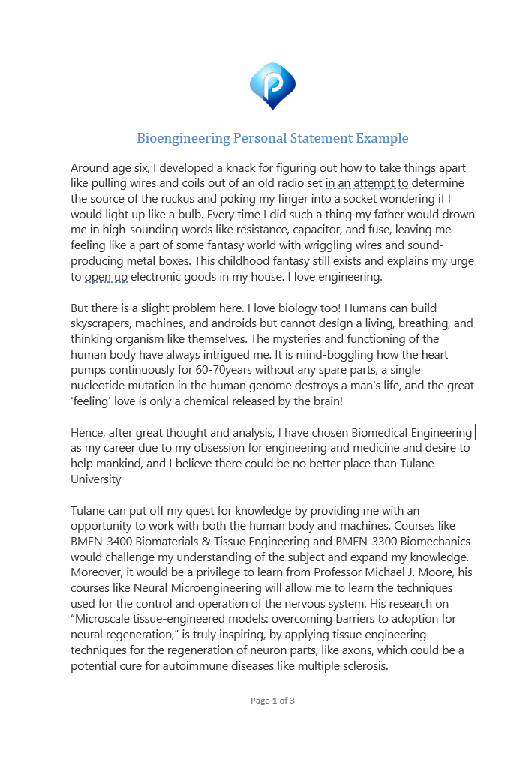
Around age six, I developed a knack for figuring out how to take things apart like pulling wires and coils out of an old radio set in an attempt to determine the source of the ruckus and poking my finger into a socket wondering if I would light up like a bulb. Every time I did such a thing my father would drown me in high-sounding words like resistance, capacitor, and fuse, leaving me feeling like a part of some fantasy world with wriggling wires and sound-producing metal boxes. This childhood fantasy still exists and explains my urge to open up electronic goods in my house. I love engineering.
But there is a slight problem here. I love biology too! Humans can build skyscrapers, machines, and androids but cannot design a living, breathing, and thinking organism like themselves. The mysteries and functioning of the human body have always intrigued me. It is mind-boggling how the heart pumps continuously for 60-70years without any spare parts, a single nucleotide mutation in the human genome destroys a man’s life, and the great ‘feeling’ love is only a chemical released by the brain!
Hence, after great thought and analysis, I have chosen Biomedical Engineering as my career due to my obsession for engineering and medicine and desire to help mankind, and I believe there could be no better place than Tulane University.
Tulane can put off my quest for knowledge by providing me with an opportunity to work with both the human body and machines. Courses like BMEN-3400 Biomaterials & Tissue Engineering and BMEN-3300 Biomechanics would challenge my understanding of the subject and expand my knowledge. Moreover, it would be a privilege to learn from Professor Michael J. Moore, his courses like Neural Microengineering will allow me to learn the techniques used for the control and operation of the nervous system. His research on “Microscale tissue-engineered models: overcoming barriers to adoption for neural regeneration,” is truly inspiring, by applying tissue engineering techniques for the regeneration of neuron parts, like axons, which could be a potential cure for autoimmune diseases like multiple sclerosis.
Furthermore, I look forward to taking advantage of the high-quality research, through programs offered by faculty labs, like research on “Orthopaedics: Tendon and Ligament Remodeling,” in the Biomechanics of Growth and Remodeling tendons and “Cell-tissue responses to Mechanical Stresses,” from the Biofluid and Biotransport Laboratory, internships and other opportunities to gain hands-on experience like Team Design Projects and Grand Challenges.
Beyond Academics, Tulane’s commitment to embracing diversity is a significant value that inspires me and assures me that not only will I not be judged for my background, but that I will get to meet students of different ethnicities and cultures.
When I am not busy in any research program or studying at the library, I would be refining my golf skills at the Audubon Park or examining the lovely paintings and sculptures in the New Orleans Museum of Art.
I know, and I am confident that I want to do bioengineering from Tulane not only because it has outstanding research facilities, a brilliant campus that I’d love to stay on, and one of the best Biomedical Engineering program, but also because it would allow me to explore and develop my interests and to participate in independent studies and research. I see Tulane as a hope for my intellectual curiosity, a place that thrives in diversity and acceptance, a city that can compete with my ambitions, the swiftness of my thoughts and the speed of my footsteps, a university that will challenge me to lead, to serve, but most of all to consistently learn. I am sure that Tulane will provide me with an opportunity to develop not only as an engineer but also as a human being.
2021-1-3-1609698454
Why this example works — strengths and ways to improve
This reads as a "why Tulane" essay. It opens with a vivid childhood scene and names specific courses, a professor and labs. The weakness is that the institutional research far outweighs evidence about you. There is little academic preparation, almost no reflection on what you have done since childhood, and several overstated scientific claims and slips weaken its credibility.
Subject motivation
pulling wires and coils out of an old radio set
The radio anecdote is concrete and memorable, and your father's "high-sounding words" add real personality. But the motivation stays at childhood curiosity plus a general love of biology. You never show how these interests matured or why bioengineering, rather than either field alone, became your choice.
Academic preparation
There is no mention of coursework, exams, projects, reading or skills that prepare you for biomedical engineering. The course codes describe what Tulane offers, not what you bring. Even one example of studying biology or physics, or building something, would ground your readiness.
Evidence and reflection
the great 'feeling' love is only a chemical released by the brain!
Your wonder at the body is genuine, but these lines restate popular facts rather than reflect on them. Some are oversimplified, and multiple sclerosis is not usually framed as cured by axon regeneration. Precise, cautious science would show more understanding than exclamation does.
Relevant experience
explains my urge to open up electronic goods in my house
This is the only hint of ongoing hands-on activity, and it is left vague. If you have taken apart or repaired devices, saying what you opened, what you discovered and what went wrong would be strong, ordinary evidence. As written, it stays an assertion.
Credibility and voice
Tulane can put off my quest for knowledge
"Put off" means delay. You presumably meant something like "fuel," and the slip undercuts you. The ending stacks grand phrases ("the speed of my footsteps") and superlatives that sound generic. Your voice is strongest in the plain, playful opening, not the inflated close.
Structure and format
after great thought and analysis, I have chosen Biomedical Engineering
The movement from childhood to biology to Tulane is logical, but you assert the decision without showing the "analysis." The research paragraph is one long list with tangled lab names. The golf and museum lines feel tacked on, and the conclusion repeats earlier praise.
What you’ve done well
- The opening radio and socket anecdote is vivid, specific and shows a distinct personal voice.
- You researched Tulane concretely, naming courses, Professor Moore's work and design opportunities rather than offering vague praise.
How this draft could improve
- Replace some institutional listing with evidence of your own preparation, such as relevant classes, a project, a repair or reading, and reflect on what each taught you.
- Explain how a specific Tulane resource, such as Moore's neural work, connects to a question you have actually explored, instead of listing several labs.
- Proofread for word choice and precision ("put off," "do bioengineering from," the MS claim) and cut the inflated closing imagery.
Related personal statements
- Environmental Geography (BSc) personal statement example
- Chemistry BSc (Hons) Personal Statement Example
- Physics BSc (Hons) Personal Statement
- Zoology BSc Personal Statement Example
- Forensic Science BSc (Hons) Personal Statement
- Environmental Science BSc personal statement example
- Chemical Engineering BSc Personal Statement Example
- Biotechnology BSc Personal Statement Example
- Biochemistry personal statement example
- Biomedical engineering program personal statement example